
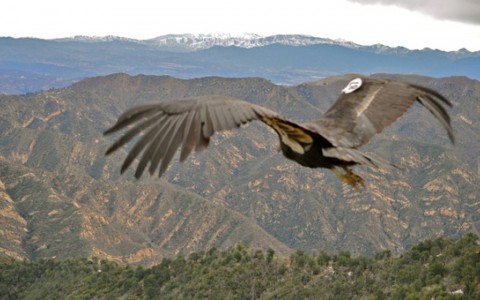
Wildness
Everything on this earth is inherently wild – if it lives and dies, it is part of the wildness that is life. Our word ‘will’ is rooted in the word wild; the will of a creature – the will of the land, is it’s wildness. In a culture dedicated to denying this truth, we tend to think of wildness as an exception – as something that exists in isolated pockets of wilderness here and there.
Wildness is the rule, not the exception.
If it exists, it is either living unhindered in a wild state or it is the victim of domestication. The keyboard I type this on comes from different parts of this wild earth – tortured and mangled together into the image of a keyboard. Everything has will; a desire for how it want’s to exist and express itself – everything is inherently wild.
Domestication
Domestication is what we are surrounded by – and it is something that has happened to us, so it’s not surprising that we don’t notice it. It is a pretty polite word for a violent process – it might be better called ‘killing the wildness’ – since that’s what it means.
A domesticated creature is one that lives according to it’s human master’s will, not it’s own.
The more that creature (or plant, land, river etc.) can be helped to forget it’s own will the easier for it’s master to maintain control.
If the cows forget that there had ever been anything other than the feedlot, they won’t feel confined.
How is it a violent process?
A living thing’s wildness is something potent – it’s strength lies in every cell of the body.
Nothing was born to live in captivity, to be droned, subdued, submissive; and nothing goes into such a role without being forced.
In order for a field of wheat to grow, every other living thing in that space must be eradicated. The field is tilled, loosening up the soil (so that it can wash away), chemical fertilizer is applied, irrigation, pesticides, all to keep the field from remembering how it wants to live. Year after year, the field is plowed planted and sprayed, consuming enormous amounts of energy, because year after year it wants to go wild, to remember, to heal – and must be beaten into submission.

The final dream of domestication – total control. Soy monoculture in the wake of one of the most biodiverse environments to have ever existed; the rainforests of Brazil.
Once human societies start domesticating each other and their land bases, it seems to become obsessive, it feeds itself.
A look around should prove the point.
It may be that humans began domesticating and developing agricultural societies with beautiful intentions, but once the process of taking wild space and turning it into a human designed ’production’ begins, things get out of control.
Humans are capable of taking forests – home to countless species of plant, animal, bird, insect, mycelium – and after killing their wildness, turning it all into a production space for human food.
The possibilities of expansion are limited only by how much earth there is to exploit.
Sustainability
How does this relate to sustainability? Is domestication unsustainable? I would say yes, but that isn’t the issue I want to talk about here.
There is a lot of buzz in mainstream society about who’s ‘going green!’, about how industrial society is voluntarily making the transition to green energy and thus becoming sustainable.
Look at the picture above – the Brazilian rainforest is cleared to make way for vast plantations of soybeans. What if the tractors that did that were powered by biodiesel? What if they were powered by methane trapped from composting human shit, which was then used to fertilize the field? Imagine that picture as an example of sustainability – vegan food being farmed using green fuel and human compost. Why would anyone want to sustain that?
The popular concept of sustainability paints a picture something like this:
- Humans are burning too much fossil fuel.
- There is nothing fundamentally wrong with how we live, or how we interact with this earth, there are just some glitches in the system.
- Acidifying oceans, ozone holes, and most importantly global warming.
- If we can only make a few simple changes – switch to green energy, organic farming, cloth bags instead of plastic, phase out fossil fuels – the earth won’t burn and industrial civilization will be able to continue indefinitely.
I don’t want to argue too much here over the issue that it is impossible for this culture to become sustainable – I think it is more important that we consider if it is even desirable!
In the sustainability movement, there is no discussion on what it is we want to make sustainable , or even what has been sustainable in the past. A culture of hunter gatherers lived sustainably in the Brazilian rainforest for thousands of years, now eradicated and subdued into producing soybeans for the Eco-conscious north American.
Can a domesticated, modern human have any concept of what is sustainable, being so removed from any real point of reference?
Remember, one of the most important parts of being domesticated is forgetting, or having your memories erased – your wild nature – who you are and what you need, erased.
The only proven models we have for existing sustainably as humans (the only way humans have ever actually existed sustainably) are hunter-gatherer societies, who did cultivate their land bases in many subtle ways, the important difference from agricultural society being that they directly depended on the health of their wild land base – where agricultural society depends on fighting and destroying the health of it’s wild land base.
One way preserves the land, one way rapidly destroys it. Hunter-gatherers are tied to a limited resource base; a culture that kills too many bison will soon after starve. This gives incentive to not get too big or too greedy. If an agricultural society gets too big or greedy, however, it just clears more land to plant more grain – and so on, and so on, until…. it becomes sustainable!

Future plans for Gothenburg, Sweden, transitioning to become a sustainable city.
What do we want to make sustainable?
This is a very important question.
Do we want to be able to continue abusing all life on this planet – conforming it to our twisted visions of what is needed?
Do we want to have a sustainable human engineered earth, completely ordered and controlled to maximize efficiency?
A sustainable world where everyone and everything is tagged, drugged, kept submissive, orderly, tame?
Or, do we want to give up on the project of controlling all life on earth?
Becoming sustainable does not mean allowing the wildness of living things to flourish; letting blackberries and dandelions grow through the concrete, turning the pavement into soil (and food!). It doesn’t mean healing our relationship with the land, or ourselves.
In fact, the popular concept of sustainability, if enacted, would simply mean making the war against wildness perpetual.
Domestication is the root of the giant chasm between humans and the non-human world; it is the engine that propels us towards killing the planet. Yet, somehow, it has completely snuck under the radar of the ongoing discussion on ‘going green’, probably because it is a much more ancient and deeply rooted problem than burning fossil fuels. It makes the solution much more complex.
The ancient civilization of what is now called Iraq successfully deforested rainforests of giant cedars, planted them with wheat, and turned them into desert in just a few centuries using primitive stone, bone and wood tools — as well as farming organically.
Phasing out fossil fuels isn’t enough. Going back to a pre-industrial level of technology isn’t enough.
There is a darkness at the heart of this culture, something very powerful and destructive that we need to see.
We need to enter into a conversation with the land we take from in order to live; allow ourselves to hear it’s screams. We need to have relationships that aren’t manipulative and abusive, with one another and the earth. ’Sustainability’ is not primary, it might even be a destructive goal – that wild aliveness flourish is what matters.
the only war that matters
is the war against wildness
all other wars are subsumed by it
We agree – the sustainability proposed by many green organisations and commentators will perpetuate the system which has destroyed the earth in the first place.
Why should we perpetuate this destructive and suicidal system any further?
True sustainability lies in undomesticated people, rewilding our economies and communities and promoting wildness as opposed to civilisation.
Whenever you see the term sustainability used, look beneath the surface greenwash and see the real message – is it perpetuating civilisation or is it rewilding and dismantling civilisation?